
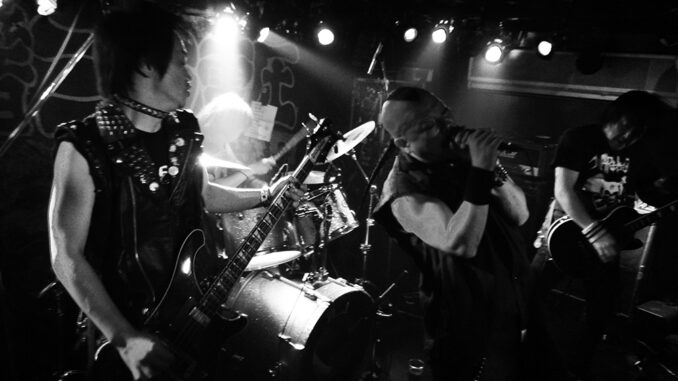
This interview was originally intended for czech hardcore punk fanzine Hluboka Orba but we haven’t managed to keep the deadline and the whole thing seemed a bit hopeless. Well, things sometimes tend to work out differently than you’ve planned them… OK. FORWARD is one of my most favorite bands ever. I love their songs (randomly) „Absolutely,“ „Burn Up“ or the great anthems from „While You Alive“ 12“. Its first track „Petration“ tears your heart out of your chest… and of course I could go on like this for longer. They’re a great hardcore punk band with a bunch of awesome songs that are damn strong… Each time I listen to them makes me feel like Go forward, take a deep breath and stop wasting your time! They keep stirring you up, pushing you forward in a way that they become a complete personification of their band’s name and I believe in them completely!
Marek Gasmask
You’ve just returned from a U.S. tour. I imagine you experienced plenty of adventures along the way, and I hope you’ll be willing to share some of them with us. So, to start things off, please tell us a few words about the tour.
Ishiya: Our last two tours, and now this third one as well, have been incredibly enjoyable. Maybe a little exhausting at times, but absolutely wonderful. Thanks to all our American friends for all their effort and support.
Souichi: We had a great time. It was our first appearance at Chaos in Tejas in six years, and it felt amazing to be able to play there again. We also got to share the stage with many great local bands while touring the West Coast, which was both refreshing and inspiring. We are immensely grateful to WILD/TRIBE and NO STATIK for the tremendous support they gave us throughout the tour.
You: It was my third time there and everywhere we went; I’d meet somebody I knew! It wasn’t much different to touring Japan.
Akiyama: This was actually my first US tour with FORWARD. It was a very valuable and significant tour for me.
Chaos in Tejas is probably the most important festival of today’s U.S. hardcore scene. How is it? Can you tell us more about this festival and about its concept?
Ishiya: We’ve played the festival twice with Forward, and I’ve been over once by myself, so I’ve attended three times. Every time, there is a great variety of bands and so many on the bill, it’s incredible. In particular, every year Japanese bands play and this is different to other punk fests.
Souichi: I think that it’s a truly wonderful event. I think it’s fantastic that great, fresh bands from every part of the globe get together with big-name acts and we get to see them all! Timmy Hefner rules.
You: It’s a great event. There’re punks all over the whole town – a very chaotic situation! I only know of zine and record shops there and being able to see live bands was really interesting and enjoyable.
Akiyama: It’s an incredible fest; I really wish we had something like it in Japan.
How big was your tour? Best/worst gigs? Can you recommend some places that you fancied on your journey?
Ishiya: I was so happy to have done this tour; I couldn’t possibly choose one gig as my “favorite”.
Souichi: It was the best tour! Scene-wise, Texas, Portland, and the Bay Area, were the bigger cities but despite their size, I really felt that even the smaller places have created some very impressive scenes.
You: I am so glad that we did this tour. Very tiring, though! (laughter)
Akiyama: Naturally, I’m really glad we did the tour. It was my first time visiting the US and I got to see many fun cities.
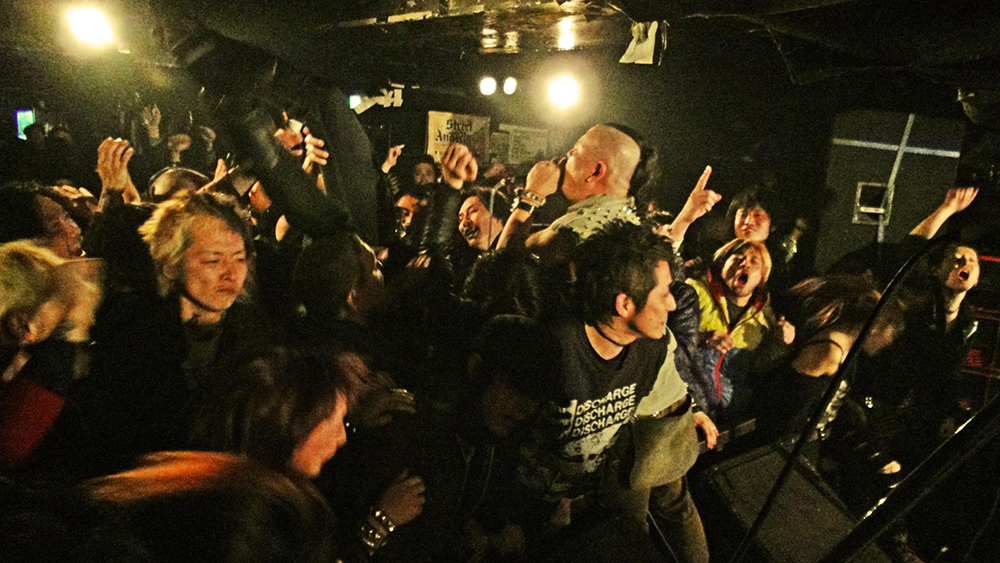
OK, let’s move on. FORWARD are no beginners. You have been playing since 1996, if I am not mistaken. You have released lots of great recordings. Is it difficult to keep the band active for so many years? Have you gone through many changes of line-up or have you all been together from the beginning?
Ishiya: Sure, there are hard times, but being active is the core of my life, so it’s the natural thing to do.
Souichi: Come to think of it, I’ve been doing this up until quite an old age! Regarding member changes, some years back I once left the band for a while. That was before TT joined. After that I rejoined FORWARD and we became a 5piece. Then a few years ago, our old drummer Doi retired from the band and we got Akiyama in. Most recently, TT has retired from the band and right now we’re a 4piece.
You: I’ve just noticed that all those months and years have passed.
Akiyama: I think any band would feel this, but your fellow members are kindred souls, companions and communication is very important. You have you fun times and your hard times, so it’s something you own together. That’s the key to continued success.
What is the main driving force of your band?
Ishiya: Can’t say for sure, but I get the feeling that it’s probably me! (laughter)
Souichi: It’s Ishiya.
You: It’s Fuku-chan! (laughter) Just kidding. It’s our leader, Ishiya.
Akiyama: Ishiya?
Can you tell us more about the topics of your lyrics? Which level is more important for you? Personal or political? You often sing about the way through life, about the everyday struggle with the harshness of life. Is this a typical topic of Japanese punks?
Ishiya: Lyrics were about all of the things going on around in my young head and not knowing what I should do about them personally. When I reflect on experience after experience with my own outlook and extend my mind, heart, and spirit, at the end of the day, when living as a punk, I think that avoiding political matters is unnatural.
Akiyama: I think both personal and political lyrics are important but I would conclude that I don’t think that is considered “Japanese-style”.
When talking about your lyrics and about a way through life, I must ask you one thing. How is it to be a punk in Japan? For the outside world Japanese punk means especially good music and perfect image. I would like to take a look deeper… I do not think that life in Japan is too easy. Too many rules and too many conservative principles, that is not the best environment for punk. However, punk is also about shocking, so I believe that in such a conservative environment the shock can really be powerful. Unlike in the wicked western culture of Europe and the USA…
Ishiya: The punk movement was happening around the world and as it continued, the hardcore scene emerged. I thank that the combined anger and spirit of resistance of young people causing punk to happen was a natural phenomenon.
Souichi: Personally, I consider living as a punk to be normal. I’m not so conscious of activism per-se.
You: I’ve always liked the violent music, so to follow that through to its logical conclusion, I ended up playing hardcore.
Akiyama: Speaking personally, I believe rules and ties of obligation exist because of adversity.
Let me go back to history, to your musical beginnings. You (Souichi) played in INSANE YOUTH together with Kawakami, later in WARHEAD JUNK together with Guy (GUDON, ORIGIN OF M), Ishiya played in DEATH SIDE. How was the scene of the 1990’s? Tell us your memories please.
Ishiya: In the 90’s, bands who’d played on LIP CREAM tours focused on revitalizing their scene. In Tokyo, bands like GAUZE and GHOUL; in Osaka/Kansai, OUTO and SOB; Hiroshima had GUDON; Kyushu with KURO, AGGRESSIVE DOGS, CONFUSE, and GAI; In Tokai, DISARRAY; and in Sapporo, you had SLANG. These bands were wonderful like bright, shining stars and there were so many of them.
Souichi: I forgot.
You: I started playing punk rock when I was 13 and hardcore punk when I was 16 and have been continuing to do so to this day.
Akiyama: I forgot. Now, I’m living for the moment!
Recently you started SMASH DETOX. How is the collaboration with members of WORLD BURNS TO DEATH? I hope there will be more recordings. The 7“ released by HG FACT / PRANK is amazing…
Ishiya: We’re all great friends! (laughter). Our next release has not yet been decided.
Souichi: Exceeding national borders and playing with our overseas friends is incredibly exciting and a refreshing. We gave birth to new musical expression and I think it was really worthwhile. I’d love to do a second EP. Zac Tew is my brother!
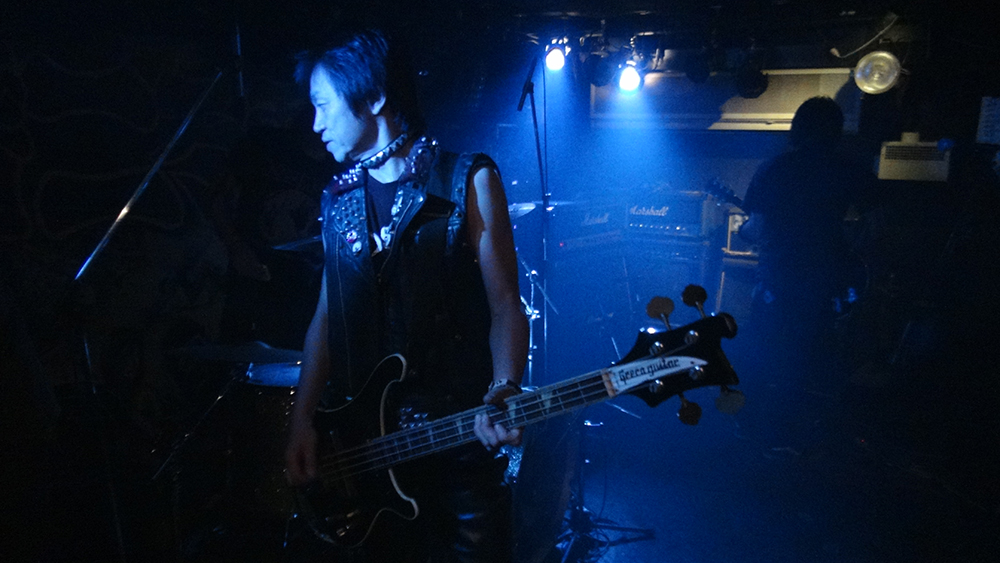
When talking about the recordings of your other bands, it would definitely be good to mention the discography of FORWARD. For instance the „While you alive“ 12“ is a jewel in my record collection. Which record do you appreciate the most? Do you consider any of your records to be a mistake?
Ishiya: New album WAR NUKE and DEATH SENTENCE.
Souichi: Our new album is my favorite.
You: I think that they’re all good but the most recent one is great!
Akiyama: New album!
You have released many records on HG FACT. That is an outstanding label. At the break of millenium this label has strongly promoted Japanese hardcore in USA and Europe. I also think that our scenes got more interconnected thanks to this label. How do you like the cooperation with this label? Is there anything that we should know?
Ishiya: HG FACT’s Sato has been a friend since the DEATH SIDE era. One day he said he was going to start a label and the rest is history.
Souichi: HG FACT is an extremely fascinating label and we’ve been with our friend Sato since our second EP. In addition, when dealing with HG Fact you never have any problems.
You: Been involved with Satoh-since Death Side.
You have been organising series of shows called BURNING SPIRITS. Do you have some strict rules or is it especially a matter of helping to your friends‘ bands? How do your shows work? Do you organize shows at a stable place or do you rent various studios etc? I guess the most famous live house in Tokyo is Earthdom?
Ishiya: There are no rules. If I had to say one requirement existed, it would be that I think the band is cool, and I want to play a gig with them. Of course, friendship is an important factor too, but that goes without saying, doesn’t it?
Souichi: I’ve never really been aware of being part of this scene. By the way, Ishiya has always taken care of the planning. In principle, the Tokyo venues we play in are LIVE HOUSE EARTHDOM and ANTIKNOCK.
Akiyama: I guess it would be the minimum amount of rules for people so it can still be feasible.
Can you introduce us the scene of Tokyo? Are there any local bands, venues, magazines and other activities that you want to introduce to us?
Ishiya: Now, there are so many bands that it’s at saturation point but I’m not knocking anyone. It’s fantastic that young people can get it together. As an old punk, it’s going to be interesting to see who survives! (laughter)
Souichi: Tokyo’s busy as usual, and there are tons of other fantastic bands everywhere. Personally, I am focusing on Tokyo label HARDCORE SURVIVES. “So” the representative puts out releases, publishes fanzines, gig promotion/organization, invites overseas bands, and works hard with a lot of vigour!
You: Even now, Tetsuarei and Forward play frequently. Gauze and The Trash have been playing for a long time, too and they are still very vigorous onstage. There are a lot of younger bands who are very active, too. We play at Earthdom and Antiknock.
Akiyama: In Japan and even outside of Tokyo, there are huge amounts of great bands and venues. I can’t just talk about Tokyo!
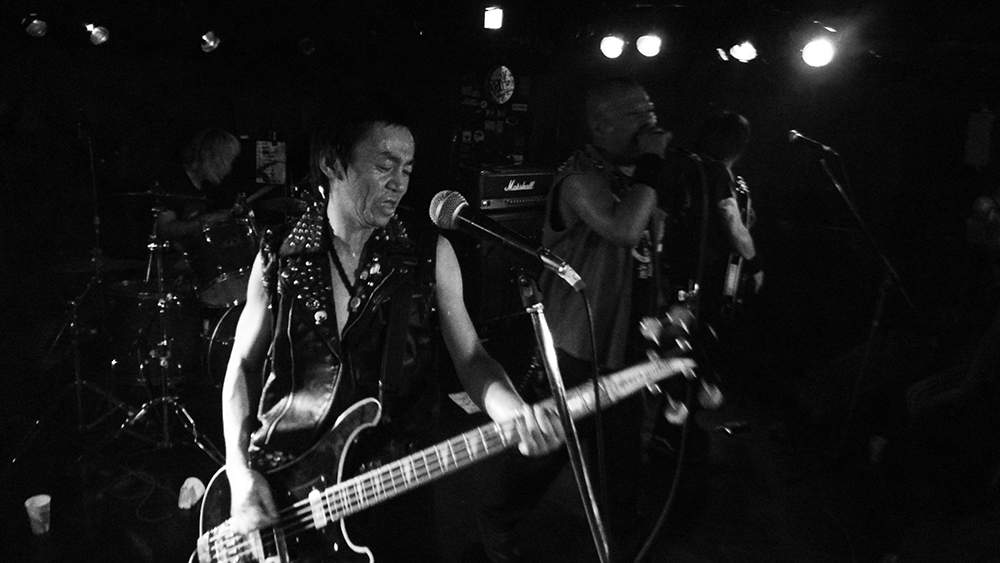
Are you also interested in the foreign scene? We would love to see you on a European tour. Are there any plans for such a tour? With what bands would you like to play in Europe? It may sound like a cliché, but why not… Dreams should be fulfilled…
Ishiya: I’ve always had a strong interest in the overseas scene. I’d like to go to every country, but I don’t have the cash. (laughter).
Rather than saying, “I’d like to go by myself”, I’d like to go on tour with an awesome currently active band. I wouldn’t care whether they were known or not.
Souichi: I’d love to go to Europe sometime soon
You: At present, we have plans to tour Australia and the USA (East Coast).
Akiyama: I believe that every country’s scene and bands are meaningful.
How much have you been affected by the huge earthquake and the consequent tragedy in Fukushima? I still remember the horrible TV shots, but I am still out of reality. Have you participated in the helping operations? Have you participated in the protest concerning the Fukushima power plant? Japan has the most terrible experience with nuclear power yet still your country launches another reactor. Does the public opinion incline towards such steps?
Ishiya: the earthquake and tsunami which struck on March 13, 2011, as well as the disaster at the Fukushima nuclear power plant changed everything.
Almost half of Japan was contaminated with radioactivity. Even now, the leakage situation is being neglected.
We support Ko from Sapporo band SLANG’s established “NBC SAKUSEN” (NBC Tactics) victim support project and believe it needs keep going to help us better understand their situation.
Souichi: What happened was a terrible shock. From that day onward, I have come to understand people in a slightly different way. We are cooperating with the earthquake and tsunami victim support activities being promoted by SLANG’s Ko’s “NBC Tactics” initiative to help provide living support and other rescue operations.
You: It’s a day I’ll never forget. When we have gigs, I make beaded accessories and sell them giving profits to the victims of the disaster.
Akiyama: My feelings about what happened can’t be expressed in a brief comment. This is a problem which will continue for tens, hundreds of years. To be clear, I have no idea what will happen to Japan or how it will change in the future. It just has to fight and persevere.

Are you interested in the history of your country or do you hate it? How is Japan in the eyes of a Japanese? I have read several books about tea, about the ceremonies… There is often a link towards the old Japanese culture, towards its own identity that some of today’s tea masters refer to as being lost…
Ishiya: I love history! (laughter) Even now, we have tea and culture. They’ve been going strong since back in (Oda) Nobunaga, (Toyotomi) Hideyasu, and (Tokugawa) ieyasu’s time!
Souichi: From my point of view, Japan is still somewhat traditional; however, I’m so used to living here that I can’t really tell. I’d never say that I didn’t know anything about history or tradition, though.
You: I’m somewhat interested. We still have tea and culture in Japan today, you know?
Akiyama: I’m not particularly interested.
Now you have free space for yourself. There are many more things I could have asked you but it would have made the interview too long. So if you want to send a message to the punks in Czech Republic you have the chance now. Thank you for the interview and especially for your complaisance, Souichi. I hope to meet you one day in the future at a gig in Brno…
Ishiya: Czech and Eastern Europe made it through difficult times. Of course, it’s understandable that people became punk under the circumstances but they must have faced many severities by doing so.
However, if you like us even a little bit, the power and strength of those punks has all come together and I would be very proud of that.
It would be great to meet you someday. Thanks!
Souichi: I hear that you have a great scene over there. By all means, let’s meet some day. I look forward to it!
You: Fight!
Akiyama: I love you!