
Charlie Claeson is a true legend of d-beat and hardcore punk, and for good reason. He survived ANTI CIMEX without any major visible damage to either his health or his sanity. Most of his former bandmates no longer play music, and those who do have usually moved on to completely different genres.
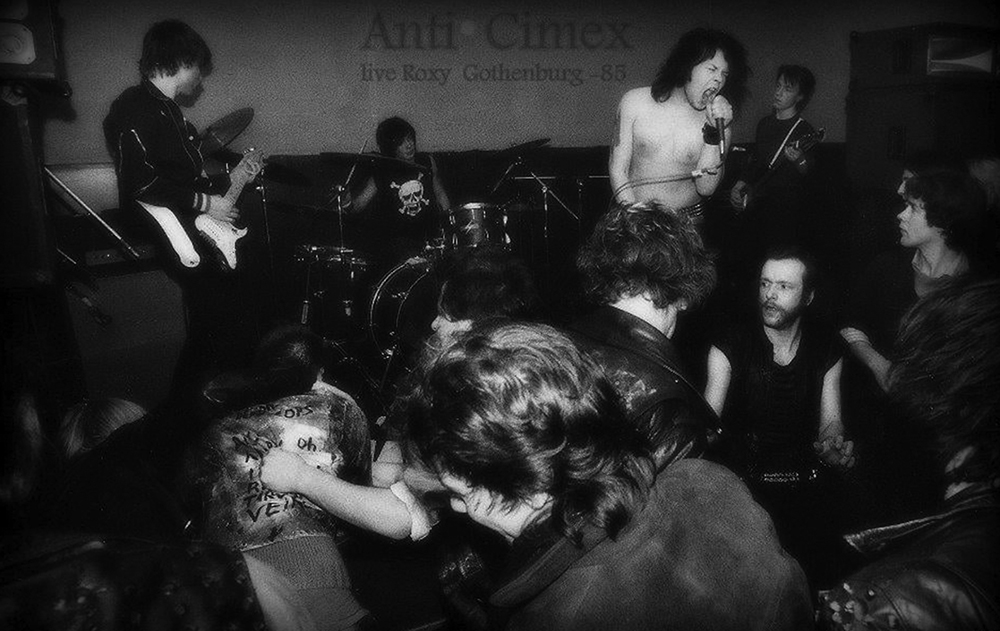
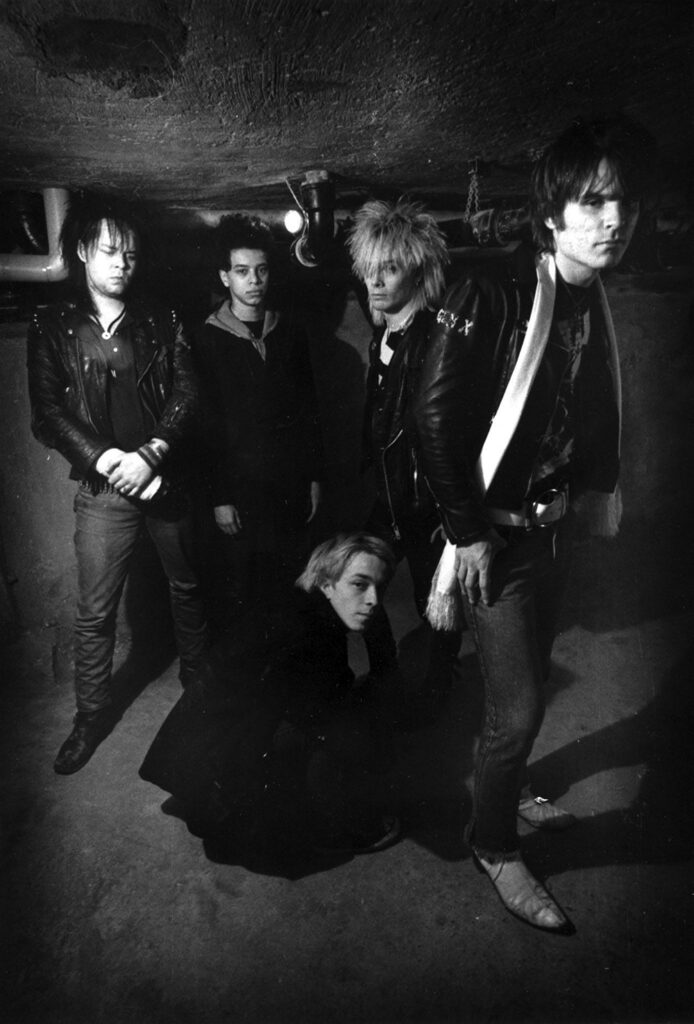
Charlie endured the band’s first era, which lasted from 1981—the year ANTI CIMEX was formed—until 1986. He helped start the band at the age of fifteen, inspired by groups such as DISCHARGE and NEW YORK DOLLS. In 1986 he also survived the infamous and ill-fated UK tour. Those who witnessed the Swedish maniacs still remember them as perpetually drunk, gasoline-sniffing punks who played DISCHARGE better than DISCHARGE themselves, yet rarely managed to finish a show due to their enormous alcohol consumption. The main culprit behind these prematurely terminated gigs was singer and liquor enthusiast Tomas Jonsson. A detailed account of that tour can be found in the online edition of issue #3 of Negative Insight.
Around that time guitarist Jocke left the band, despite having played a crucial role in writing the music. By then ANTI CIMEX had already released the groundbreaking demo Anarkist Attack (1982) and the devastating EPs Raped Ass (1983) and Victims of a Bombraid (1984). Their self-titled mini-LP had already been recorded but had not yet been released. What followed was a four-year hiatus that brought several significant changes. Jean-Louis Huhta, the percussionist who had played both on the UK tour and the aforementioned mini-LP, left the band. The unusual percussion instruments he used in ANTI CIMEX were homemade creations built from various steel pipes. Tomas Jonsson’s alcoholism worsened, and eventually Cliff Lundberg (ex-BLACK UNIFORMS) joined the ranks of ANTI CIMEX.
This marked the beginning of the band’s second, metal-punk-oriented era. Along with his guitar skills, Cliff brought a recording contract, which led to the release of the band’s first full-length album, Absolut Country of Sweden (1990). Shortly after its release, the band was hit with a lawsuit from the makers of Absolut Vodka because the cover artwork borrowed heavily from the company’s famous logo. Unlike the similarly named company Anticimex—the Swedish pest-control corporation after which the band had taken its name—which simply forwarded letters and inquiries to the band, the vodka company’s lawyers showed no mercy, forcing ANTI CIMEX to change the cover artwork. Fortunately, the original artist, Chris Achilleos, never seemed to mind. His painting had originally appeared on the cover of an issue of the tabletop gaming magazine White Dwarf.
The new line-up did not last long. The band’s final studio recording came about at the request of the Japanese label Discipline, a subsidiary of Vinyl Japan. By that point Jonsson was drinking heavily and had largely withdrawn from the creative process. The band mailed rehearsal tapes to him, and he only showed up at the studio to record the vocals. With the release of the phenomenal Scandinavian Jawbreaker (1993), the story of ANTI CIMEX came to an end.
Fortunately, Charlie Claeson’s story did not. Together with Jean-Louis Huhta, he remains one of the very few former members of ANTI CIMEX who are still musically active today. You can find out what he has been doing ever since in the following interview, conducted in early December 2022.
Questions: Jenda Lepacek
Hi Charlie, I hope you’re doing well. Although it’s been 41 years since ANTI CIMEX was formed, let’s start by talking about the present. Two years ago you launched your own label, Cimex Records. What made you decide to do that?
It was all because of COVID. There were no shows happening during the pandemic, but I still wanted to stay involved with music. The idea of starting a label had been in the back of my mind for a few years already, and the pandemic simply accelerated things because I suddenly had a lot of free time.
Besides running the label, you’re also playing in several bands these days (PISSER, VENGEANCE BY PROXY, KNIFE FOR AN EYE etc.). How do you manage them all?
As I said, COVID took live shows away from me, which gave me time to focus on the label and recording music. Some of the bands you mentioned are currently in hibernation, though, and I honestly don’t know what will happen with them in the future. That’s still up in the air.
I have to tell you that I really love the debut album by KNIFE FOR AN EYE. Can we expect more recordings from any of those bands?
We’re all getting older and we all have other things taking up our time. That said, we still have plans for future recordings. I haven’t given up on any of those plans yet.
Do you still play live? I remember seeing you at Obscene Extreme Festival in 2016 with WOLFHOUR, and to be honest I have no idea whether you’ve played any shows with a band since then.
Yeah, I do, but less and less these days. Right now I’m playing live with THE PARTISANS, even though we’re all pushing sixty. As for the other bands I’m involved with, we’ve never officially said we wouldn’t play live. On the other hand, I’ve never really said that we should. At least not yet.
Since we’re talking about OEF, how did you enjoy it?
I think that was my seventeenth visit to the Czech Republic. I love that country. Twenty-five years ago I actually wanted to move there. As for OEF, all I can say is that it’s truly unique.
After ANTI CIMEX you played in many different bands. One thing I’m particularly curious about is DEATH DEALERS, where you played alongside Dean Jones and members of the then-current RAW NOISE line-up. How did that band come together?
EXTREME NOISE TERROR and DRILLER KILLER, the bands I was playing in at the time, shared a show in 2009. Dean and I got talking and he mentioned that he’d like to start a side project with me on drums. We spent the next two years planning it and exchanging recordings. In 2011 I flew to England to record the album. The recording process itself was pretty difficult because I hadn’t played drums for seven months, but in the end I managed to pull it off. I think it’s a good record.
For quite some time now there have been rumors online about an ANTI CIMEX documentary. What’s the current status?
A film/documentary about ANTI CIMEX is currently being made, but that’s all I can tell you.
What was the main reason for starting ANTI CIMEX in the first place?
The need to create something, to have a medium through which we could express our hatred of society, and to have some fun while doing it.
I’ve read at least three different stories about how the band’s name came about. Which one is the real version?
We were on our way to the studio to record and still didn’t have a name. While I was carrying my drums out of the rehearsal room—which, by the way, was located in my house—I noticed a sign that said „Anti Cimex.“ I suggested it and everyone agreed.
(Editor’s note: Anticimex is a Swedish pest-control company.)
Not long after forming the band, you recorded your first EP, Anarkist Attack. What do you remember about the recording session? It must have taken some guts to enter a studio so early on.
It was terrible—an absolute nightmare. None of us had ever been in a studio before and we had no idea what we were doing. The entire recording was completed in six hours. I think we basically just walked in and played the songs.
You then recorded three EPs with what was essentially the classic line-up: Raped Ass, Victims of a Bombraid, and the self-titled mini-LP. Today they’re considered genre classics. How did the songs come together? Who wrote the lyrics and who came up with the riffs? Are there any unreleased songs from that period?
We wrote the lyrics and arranged the songs together. Most of the riffs were brought into the band by Jocke and Jonsson. As far as I know, everything from that era has been released.
Jocke left the band after the UK tour. I know most of those shows didn’t exactly go according to plan, but what was the main reason for his departure?
We had to cut the tour short because we ran out of money. We cancelled the last two shows because we’d already been stuck with three days of forced downtime. On top of that, we had nothing to eat and couldn’t even afford anything to drink.
Jocke left because he didn’t think there was any future in what we were doing and wanted to play softer music.
Then came the first break-up of ANTI CIMEX, which lasted until Cliff agreed to join the band. How did you actually get to know Cliff?
I honestly don’t remember. I’d known him for a long time already. We tried a few other guitar players, but all of us wanted Cliff in the band. At first he wasn’t interested at all, so we simply waited for him.
The first album with Cliff was Absolut Country of Sweden. The songs are much longer than your earlier material. Were any of them written before he joined the band?
I’ll keep this one short: no. All of those songs were written after Cliff joined the band.
The lyrics on Absolut Country of Sweden are quite different from the typical d-beat themes. To me they seem more focused on life itself than on the horrors of war. The album closes with „Rose,“ which you’ve previously described as your favorite song on the record. Could you tell me what it’s about—or even better, send me the lyrics? I’m asking because it’s the only song whose lyrics weren’t printed in the booklet and they seem impossible to find anywhere.
We got tired of writing songs about war, so we started singing about our own lives instead. Besides, we didn’t really know anything about war, whereas we knew plenty about our own lives and experiences. To be honest, they weren’t much prettier than war itself.
Fuck, I don’t have those lyrics anymore. It’s about something deep and was probably written while we were under the influence of drugs. For me, lyrics are simply another tool for expressing emotions, if you know what I mean.
The original album cover was modeled after the Absolut Vodka logo, which eventually landed the band in legal trouble. What do you think of the alternative cover with the warrior? Did you have several options to choose from?
We didn’t really care what ended up on the cover. We were just happy to have the album out. That said, we did like the artwork. You can actually see its influence later on the cover of Scandinavian Jawbreaker.
Out of all ANTI CIMEX releases, Scandinavian Jawbreaker is probably my favorite. I think it’s the perfect combination of great artwork, a powerful sound, and outstanding songs. Did the record receive much attention when it was released?
Not really—or at least we didn’t notice any. About twenty years later we discovered that all correspondence had been going through Mats Bodenmalm (DISTORTION RECORDS, DOLORES RECORDS etc.), and communication wasn’t exactly his strongest quality.
(Editor’s note: Mats Bodenmalm ran the aforementioned labels and, judging by accounts from people who dealt with him, was not always the easiest person to work with.)
After that the band split up again. Jonsson went on to form WOLFPACK, while Cliff focused on DRILLER KILLER. What did you do after the break-up? From what I’ve found online, you didn’t become musically active again until around 2000. Had you simply lost interest in being in a band?
My son was born in 1992 and I wanted to spend my time at home with my family. I no longer wanted to play in a band. That lasted for about two years, until I joined NOT ENOUGH HATE. I only played there because I thought it would be fun.
After that, a local band called TROUBLEMAKERS approached me. At first I wasn’t interested and spent a long time thinking about it. Eventually I agreed and ended up playing with them for ten years and doing around two hundred shows.
For a short period of time you also played in DRILLER KILLER. What was it like working with Cliff again?
If you consider four years a short period of time, then yes. I never had any problems with Cliff. He’s an amazing person—talented, creative, and wonderfully chaotic. I love the guy!
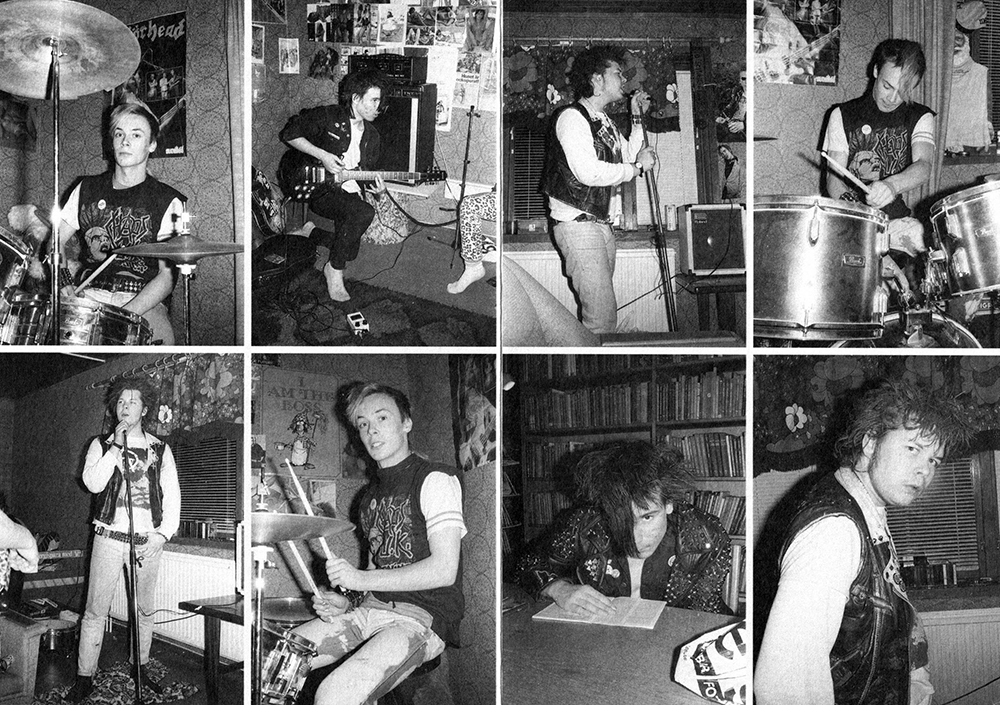
This question is basically mandatory. Do you think you’ll ever record music again with any former members of ANTI CIMEX? I imagine you must receive offers for reunion shows all the time.
ANTI CIMEX will never get back together again. I can say that with complete certainty. We’re all very different people now, so it simply wouldn’t be the same.
Maybe I’ll collaborate with some of the former members in the future, but that’s impossible to predict. Whatever is meant to happen will happen eventually. Either way, I’ll be happy.
Thanks a lot for your time, Charlie. Is there anything you’d like to add before we finish?
Just that people should support underground music, support small labels, buy records, go to shows, and keep the scene alive. That’s the only way any of this survives.
Thank you for the interview!