
625 THRASH is a cult label known to fast hardcore, thrashcore, grindcore, and powerviolence fans all over the world. Behind it stands the legendary and highly respected Max Ward. One of the most influential figures in the DIY hardcore punk scene, he has played drums or handled vocals in many renowned bands, including CAPITALIST CASUALTIES and SPAZZ. He has also booked countless shows and tours for international bands in the Bay Area, helping to shape and support the underground scene for decades.
Questions by Ondra /On/, Otto /Ot/, Ales /A/
On: What was the first hardcore punk stuff you listened to? What kind of stuff?
My sister introduced me to punk rock around 1983, although I was much too young to really understand what it was. However, she took me to a few local shows, and had her friends over to the house who were playing in bands or going to shows, so there was always talk of music. By 1984, she had given me some of her old records before she moved away to college: it was a mix of different genres: from SOCIAL DISTORTION and 45 GRAVE, to the CRUCIFIX and an early 7 SECONDS EP. It was the latter records I naturally listened to, although, again, I didn’t really understand the specific differences between the bands. There was something raw and rebellious in those records, and I started to search the local record store for bands that had a similar raw sound. I did so by looking at the record covers, seeing how many songs were listed (more songs = shorter and faster), and looked at the t-shirts the band members were wearing. By this point, I started to listen to SUICIDAL TENDENCIES, DRI, ADRENALIN OD, DISCHARGE, and a lot of the Mystic and Oxnard bands such as ILL REPUTE, RKL, STALAG 13, etc which were popular in my area. With this baseline, I started to go to shows by myself, and, once I started reading Maximum RocknRoll and learning about different scenes, it was a natural progression from SUICIDAL TENDENCIES and DRI, to COC, CRYPTIC SLAUGHTER and LUDICHRIST, to then LARM, INFEST, PROTES BENGT, NO COMMENT and HERESY, to finally NAPALM DEATH and FEAR OF GOD.
On: When did you start playing in bands? Did you play with any notable bands during those early days? What process did you use to teach yourself the drums?
I was influenced by some older kids at school who taught me about the Oxnard bands and who had their own bands, so I would go to their practices and mess around on the drums. I would watch drummers live, so I saw how right-handed drummers would play fast on the high-hat or ride cymbal, and hit the crash cymbal for accent. I would try to mimic what I saw by playing “air drums” in my room when listening to records. When I turned 13 (1986) my mother rented a drumset for me, which I started practicing on, but I never took lessons or learned to read music. It was just mimicking what I saw at shows or heard on records. Then around 1988 I played in a band in high-school called BACKSLIDE that was the first “real” band I played in: we recorded a rehearsal demo and played two shows. Then in 1988 I met the dudes from PLUTOCRACY who were looking for a drummer and I started to play with them. At that time, they were like a fast-punk band, and I introduced them to fastcore and grindcore that I was listening to, so we slowly started progressing in that direction.
On: Plutocracy broken up after you left the band in early 1993 and the remaining members formed NO LE$$. How was your experiences with leaving or being fired from the band in general? Have you ever been fired or did the bands always split up naturally?
I left the band, which happened naturally – I think everyone saw it coming. I had one idea of what I wanted to do, and this had informed the later PLUTOCRACY stuff. But I respected the dudes and loved NO LESS and the other projects they did, which is why we continued to collaborate on shows and releases. As for ever being fired, I don’t think this has happened. Most of the time its just members grow apart or have different visions of what they wanted to do. This happened with CAPITALIST CASUALTIES as well. We had been on a long hiatus, not playing shows, practicing or anything. I had decided to enter graduate school and move to NYC.
In my opinion, good punk bands generally have about 3-5 years of really exciting productivity. I think its best to move on and work with other people in order to challenge oneself and try different things. We are not classical musicians or progressive rock bands, so after the initial explosion of creativity and intensity, I think its best to leave that legacy as it is, and not try to continue.
On: The very first 625 Thrashcore release was the NO LESS/EVOLVED TO OBLITERATION 7“EP although I believe that are more releases before this one. It was the first press, the first print of artwork, the first spent cash and as well an ideas, plans, motivation behind. Back in the day, did you have record labels that were kind of inspirations for you, that you that “those guys made it, maybe I can do it,” or maybe from an ethical standpoint, people you thought of?
Yes, the NO LESS/ETO split EP was the first “official” 625 release, although I co-released the 976/PLUTOCRACY split EP and the APROCTOUS/PLUTOCRACY split flexi. Back in 1990-1991, no one was into those bands and fast HC or grind was not popular in our area, so we had to release our own records. However, it wasn’t until later that I decided to release other bands from the local area under the name “625,” with the aim of supporting those new, local bands. At first it was out of necessity – the true first motivator for “DIY” – but later I took inspiration from labels like BCT tapes, MCR Company in Japan, HEART FIRST in West Germany, that were focusing on international but smaller or newer bands. So I thought of 625 as a means to introduce new bands that I liked.
On:I read that your goal was to document an explosion of brutal hardcore from the local West Bay scene. Do you think that you reached the goal? What else can be set as a motivation or future goals for 625?
Yes, at the time it was out of necessity. The local punk club Gilman St. wasn’t booking brutal hardcore bands in 1989, 1990, 1991, and labels were not interested in that style. So, I wanted to support the bands that played that style in the early 1990s in my area. I’m not sure I reached that goal, but soon there were other, smaller labels from the bay area that were documenting that scene, and helping those bands to get shows, so that really helped to get the word out on our small, local scene.
On: When and what exactly started the greater interest of extreme hardcore bands at your area? Can something be specified as a trigger? In which years was the greatest interest in extreme HC?
Well, I think one element was Fiesta Grande shows and what would soon be called “west coast power violence” had a wider influence, so you even had emo kids in the Bay Area starting PV bands (e.g., Jenny Piccolo). I think as far as the West Bay bands were concerned – all the members had been playing in previous bands in the late-1980s/early-1990s (e.g., IMMORTAL FATE, PLUTOCRACY, 976, RADIOACTIVE LUNCH, SHEEP SQUEEZE, etc) and so once those bands broke up, people re-assembled into new bands and tried to push it further. We all influenced each other, and since the wider Bay Area punk scene ignored us at the time, we had to support each other, put on our shows, release our own records, etc. It was through this that we all influenced each other – so perhaps it was that—the necessary support and cooperation—that sustained the interest in brutal hardcore and grind.
On: Who are some of the bands that you wanted to release records on 625 with but didn’t get a chance to?
There are many, but the ones that stick in my memory are those bands that I think should have been documented but were not. So for example, from Redwood City there was a band called DISCONTENT that really influenced me, and another from San Carlos/Belmont called VOMIT. I wanted to release their demos once 625 started, because they had influenced so much of what I was into in the late-1980s. I had always dreamed of doing a split LP of the ATTITUDE ADJUSTMENT and FINAL CONFLICT demos because I listened to those religiously throughout high school. One of my biggest regrets is that a RAPED TEENAGERS collection (of early material) was being planned but then fell through. The RT Ep and mini-LP are two of my most favorite HC records. Later, there were other projects that fell through, but for the most part, if I didn’t release something that I liked, someone else would. So it wasn’t imperative for 625 to release it specifically, as long as it was getting released. There are so many labels now in the 2020s that I am not sure what the purpose is for continuing 625. I think about this often, and would be comfortable stopping the label since I know there are so many other good labels to release underground bands.
On: Yes, there are a lot of good labels, but almost all the “fundamental” have already ended. We’re talking about power violence, fast HC, OK? Do you feel that 625 is currently almost the last and most iconic of this famous era like Slap and Ham, Six Weeks or Sound Pollution? I would say that 625 is constantly release an essential records of extreme hardcore/fastcore grind style. 625 is a brand, fans collect records with the label logo and I’m sure this won’t happen again with new or smaller labels….
Well, I think labels like TO LIVE A LIE or IRON LUNG have created their own space within the world of labels, and people will turn to them and trust that they are putting out something strong. One interesting thing that I have learned by talking to people over the years is that 625 has been many things to many different people: so for some, it is a “West Bay” label, for others it is a “power violence” label, for others it was a label that documented the 2000 thrash revival stuff, and for others it was a label that put out experimental stuff (like LORDS OF LIGHT, etc). So depending on who I am speaking with, they will talk about how a certain 625 release is really important them, but when you look at the discography overall, its very different from some other releases.
In the end, I just happened to release bands that I liked and wanted to support – which tended to be brutal hardcore/power violence/grindcore bands.
On: Since you have no distribution, Which distribution channels do you currently use?
My exclusive wholesale distribution is through Ebullition – they are awesome and one of the last honest DIY punk distributors who have remained true to their ethics. Kent and Lisa have really supported 625 over the years, and I am not sure what I would have done without them. More recently, Will at To Live a Lie has taken on 625 mailorder, which has made it easier for those wanting to order 625 records in north America. But of course, international mailorder is more difficult, particularly with postage. But Will is awesome and very dedicated to his label and the love of fastcore/grindcore.
On: Hcpunk scene sometimes reminds a marketplace today. How a newcoming hc punk kid can recognize what is good, how to find a good source and get what real is behind the punk scene?
I have no idea really. Things have changed so much from how the punk scene communicated back when I first started exploring bands, etc. I think with the wider availability of information and the speed through which you can access it has also made people bored with the scene and elevated only those bands that are “hyped” on social media, etc.
On: Do you listen to music via Internet often? Can people get a value of music since all it is to them just a bunch of data?
I sold my record collection long ago, and since I move back and forth between the US and Japan, it doesn’t make sense for me to have a record or CD collection (which I would have to move back and forth, or put in storage every time I moved). So now I listen to music on the internet, but I tend to only listen to bands that I liked 30 years ago and which I originally learned about by studying their record covers and inserts, reading print magazines, etc. I don’t really listen to too much new bands via the internet, and not sure how one goes about researching that, apart from having some software algorithm suggest something to you on bandcamp.
On: And when you talk about the new bands, how do you perceive the huge wave of power violence bands, especially in the USA, that is here now? Is it possible to become familiar with it and find “recognizable” band?
I am not sure really. I mean for me, my relationship to music and the scene is very different now. I am not searching for bands like I was in my teens and 20s. Back then it was about trading tapes, reading zines, and ordering or trading records. But I am not used to the new forms of punk communication (i.e., social media) and get tired of scrolling through pages of pages of bands. So the recent bands that stick out to me are the ones that I have been communicating with, I get to know as people and understand as a band, and whether or not they are the “best”, “brutal” or “most original” is not necessarily my concern. Its if they are doing things honestly and authentically, whether that means they know their history, or are just small-town delinquents. But its hard to learn that from listening to a few digital files on bandcamp or youtube.
On: I have realized that you run a 625 Instagram page, but no official FB site. Is there any special reason? Do you use these tools like Instagram as a help how to promote your releases or how do you handle them? Do you find yourself scrolling through comments? Is there an alternative?
Yes, I never started using MySpace 20+ years ago, which was the first real social media space that punk bands seemed to use. At that time, I was still getting 20-50 emails a day, and apart from answering postal mail, sending out orders, responding to email, and calling bands/pressing plants, I did not want one more thing I needed to check or respond to. However, in the early months of the pandemic (i.e., spring 2020), my longtime friend Brian Stern (from Bad Skulls shirt printing, and who I played in MINDLESS MUTANT with) suggested that I start an Instagram page. At that point I was worried that although I was continuing to release great bands like INTERNAL ROT, I was not sufficiently promoting them. In other words, I felt responsible to these bands, and in light of the death of many of the print magazines (Maximum RocknRoll, Heartattack, Slug and Lettuce, Short Fast and Loud) that I advertised in, I decided to overlook my objections to social media and start to use Instagram. I don’t necessarily like using Instagram, but I hope that it helps promote the bands that I am releasing. As for an alternative, I am not sure. I think there would need to be a collective and explicit disengagement from such platforms, one that had a message for why it was important to do so, and a plan for alternative forms of communication that didn’t give “content” for companies to sell to advertisers. Without an organized disengagement, the influence of social media on the punk scene will continue.
On: Yeah, I do use a social media as a tool for promoting our band´s releases or announcement for a gigs. Do you agree that the weakest point of DIY labels is just promoting of bands for obvious reasons? As you mentioned, all well know zines like MRR, SFL are gone and other sources are not available.
Maybe? Im not really sure. I mean, people who know the labels and like their releases will naturally find out about their releases. But for me, I am unwilling to advertise in big metal zines or do “banner ads” for popular blogposts, etc. That just seems weird, but perhaps that is because I am behind the times. I would much rather have someone stumble upon a 625 record in a distro box at a show, then learn about it through a banner ad with a promo-code, even if the latter reaches more people and “sells” more records. Perhaps that is irresponsible of me, which is a question I struggle with constantly.
On: You have toured a lot in the past, Brazil, Japan, Europe. Has every country had its own variation of a “hc punk” scene?
Yes, indeed, there were differences, particularly in how the scene related to its larger society. However, I think these differences were more political than “cultural” lets say: so for example, if there was a strong leftist, radical movement, the punk scene would be adjacent to it, such as in Europe (and the squat scene) and Brazil.
On: The scenes outside from USA, Japan or UK are generally overlooked. Why do you think that people still focusing on the tired „western“ scenes instead of looking for a fresh, energetic bands outside of popular places?
I think this is the legacy of “advanced” capitalist countries and who had markets which supported that music – even if it was rebellious and presented as an alternative – and which could export their music to other parts of the world. This is the basis for what punks sometimes refer to as “cultural capital” or “cultural imperialism” but its built upon this economic power and the markets that emerge out of it.
I tired of the American scene in the mid- and late-1980s since so many of the 2nd generation hardcore bands had sold out by that time. Thus I looked elsewhere for inspiration, and luckily enough European HC was being imported or discussed in punk zines I was reading, so I learned of NEGAZIONE, SO MUCH HATE, HEIBEL, RAPED TEENAGERS, HHH, CHALLENGER CREW, INDIGESTI, etc. However, it was much harder to find Japanese and Brazilian punk, and I only learned about Eastern bloc punk through Maximum RocknRoll and its radio show.
On: Yes, MRR Radio show is still on, but MRR zine is gone in paper form. How much of a loss is this to the scene worldwide? Is the strong political bent and international reach of the MRR missing?
Yes, very much so. I think that Tim Yo was an immensely important influence on worldwide punk, because he was a supporter of it and stuck to his ideals. I miss the zine, and still think that print-format is the ideal for punk. But I understand that, financially, it was untenable to keep it going. However, in my (outdated and cynical opinion), social media posts and websites do not have the same impact or lasting influence as a print zine which can be collected, read and re-read, and handed off to friends or left at a gig for people to pick up and read.
On: I know that you have to fund your label. Other can live from punk. Is it ok to make a living off of punk rock? What makes a punk business different than any other business?
I think its OK to do it as long as you are doing it ethically and honestly. Perhaps it was possible to support oneself through punk ethically at one time, but I am not sure how to do so anymore, at least not in North America. I support the label and my band activities through my regular salary. This way, I don’t make decisions about what bands I think will “sell,” only which bands I like. Plus, I am able to keep the prices close to the manufacturing cost, although pressing costs have risen dramatically in the last few years. Almost all years 625 loses money, so I am endlessly putting money back into the label.
On: I read that you was a fan of early SLAYER, METALLICA. So to speak about metal scene, how do you see the fact that a small DIY bands are willing to play at monster metal festivals? I can understand the motivation, but do not think that´s the direction where hardcore bands should follow.
No, absolutely not. It’s sad to see that when it happens. I think LARM’s song “Metal Attitude Sucks” stands today as it did back then. And more than an “attitude” I think it’s the music business that should be rejected – whether an “alternative” festival or “metal” festival” or whatever. Back in the mid-1980s I was into the “crossover” scene, so I was into bands like COC, CRYPTIC SLAUGHTER, etc who took influence from, and influenced, thrash metal bands like SLAYER and VIO-LENCE, but it seemed that the crossover HC scene was still relatively small, or at least not playing “festivals” at the time. However, the older I got, the more important and clearer those ethics became to me.
Ot: I always loved to read your „Mosh of Ass“ zine where you wrote about an unknown bands mostly. Is this still actual in this world of internet? Do bands still send you demo tapes or just a links of their bandcamps? What do you think about this online music era? I think you still remember the old good days of sending letters and getting tapes or EP´s from known or unknown bands? So can you tell us a little bit more about this?
The zine “Mosh of Ass” was my way of supporting the bands who were sending 625 tapes – I was getting a lot of tapes in the late-1990s and early-2000s, and rather than just filing them away, I thought I would write on them and do a free zine so that people could write to the bands. Now I suppose Bandcamp works the same way, but the difference, I think, is that when you traded tapes with someone, there was an expectation of writing a letter, adding some stickers, etc so that you got a sense of who the person was or what scene they came out of it. Now I just get one-line emails with “here is my band, please check” as if the digital files on bandcamp or soundcloud are enough for me to get a sense of who the person writing the email is, or what their band is about. A lot is lost in that kind of communication. And yet, on the other hand, it is accessible to many people in all parts of the world, so you can find bands from all over the world who may not have the ability to make tapes or CDs and send them internationally.
Ot: You played in many bands like Spazz, Capitalist Casualties, What happens next, Plutocracy… etc. What´s your favourite band you played in? Are you still in contact with members of all those bands? Did you met someone during years? Do you know each other about?
Each band was different, and the dynamic was different – both musically and personally. I can’t really say there was a “favorite” band, but there are records that I am proud of that I played on. I am still in contact with some people – particularly as people are asking to re-release things, or are trying to track down old bands through me. I get the sense the worldwide scene has reached its limit, so now people are turning inward and to the past, trying to re-discover bands and re-package them. It seems a bit weird actually. But because of this, some of my old bands are contacted, and thus the members need to discuss what to do.
On: Your bands were stylistically different. Power violence, hardcore/thrash, grind core, etc. How did you have to adapt your drumming style? With which band did your drumming style suit you best and vice versa?
Good question. I think if you listen to all the bands I have played with, I have one basic drumming style, whether that was in a straight forward HC band or a grindcore band. I am not a good drummer, and by no means am I “musician,” but early on, I learned a simple 1-2-1-2 fast punk beat by listening to MINOR THREAT or 7 SECONDS which is the basis for all the fast music I love. However, even with that simplicity, I am very limited in what I can do, and have a hard time integrating new fills or different accents.
As for bands, I would say that WHAT HAPPENS NEXT was the band that suited me best – I am very proud of the Stand Fast LP. As for the most challenging, I would say starting to play with CAPITALIST CASUALTIES, because Matt was such a ripping drummer. He was probably the best fast hardcore/powerviolence drummer that I saw. His fast beats were so brutal. I would watch him when CxCx played, and was lucky enough to be in the studio when they were recording Disassembly Line. So Matt was like a god to me. Then to be asked to play in CxCx, and knowing my limitations, I was really nervous. Although there are some records I like of my time playing with CAPITALIST CASUALTIES, I think Haraldo was a much better fit for the band and came closer to approximating the early brutality of when Matt was drumming for them.
On: Ok, a few questions about a legendary SPAZZ. When was the first time you met Chris Dodge? I was pretty surprised that SPAZZ was initially intended as a two man project with Dan and Chris was not in the original line up.
Yeah, in the beginning it was me and Dan, who started the side project and wrote the first 10-songs. I talked about it in a PLUTOCRACY interview in ATMOSFEAR zine, which Chris read and contacted us to ask about joining. He learned the songs in one practice and we recorded soon thereafter, which became the first 7”. I think that 7” is quite bad, and I wish we would have waited for our sound/style to gel, but Chris was into releasing it, and Dan and I were just excited to be collaborating with Chris.
As for meeting Chris for the first time, it could have been at a STIKKY or NO USE FOR A NAME show, although I am not sure if we spoke. I know that I would see him at shows since, at that time, no one was really going to fast hardcore shows, so there were often only 20-30 people at them anyway. And since I was a huge fan of STIKKY, I knew who Chris was. So really the first time meeting him and having a serious conversation with him was when SPAZZ started.
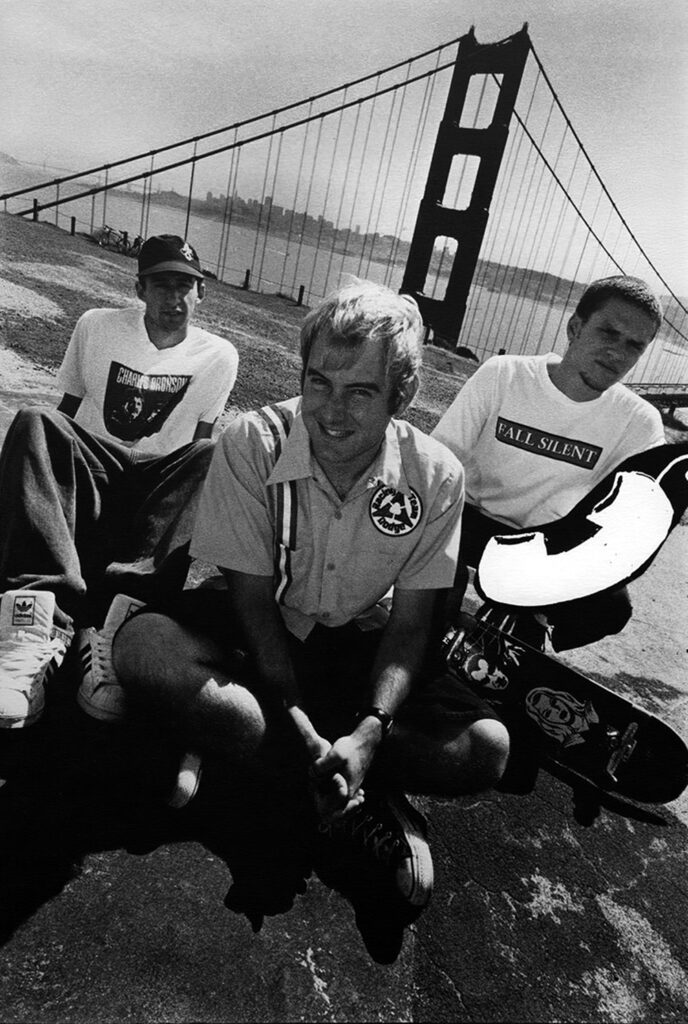
On: How many and how often do you get a requests to reunite SPAZZ? I can imagine that Maryland fest could be interested, am i right? Did you ever just thinking about the offer or strictly no way?
We have gotten requests, but we all recognize that it’s a bad idea. If anything, SPAZZ was best as a studio project, and the records were much better than us playing live, because we could mix samples, arrange songs, etc. Plus, playing live would only be worse now that we are all near 50 years old.
Personally, I am not too into the idea of bands reuniting. I understand why people do it, but really its just a collective midlife crisis. First it was the 70s punk bands that reunited, then the early-1980s bands, then the NYHC and youth crew bands, and then power-violence bands. I wish people just started new projects, rather than trying to relive the past. New projects are much more interesting, and challenging.
On: Recently you did a repress of SPAZZ full lengths. Is this the best way how to provide a chance for people to get a SPAZZ records for affordable prices? And to say big fuck off to all those dealers at Ebay auctions?
Yeah, once Chris decided to fold Slap A Ham, and there seemed to be continued interest in the Spazz records, we decided to keep it in the family and have 625 do the vinyl. I was not, and am not, into digital formats, so I wanted to focus only on the vinyl. We all knew Scotty from Tank Crimes so when he started working with some classic bands about represses (Dystopia, etc), we trusted him and decided to work with Tank Crimes for the formats or records 625 wasn’t releasing.
On: SPAZZ/SLOBBER split 7“EP. This was put out by a student at SF state as a final project for a business marketing class.Is this true or not?
Yeah, it might be. Dan would remember the details. As for a business model, I hope the professor overlooked the inability of selling that record – ha!
On: At the heigh of Spazz’s popularity, were you guys approached by any bigger labels to sign on? SPAZZ were gonna do a 7″ with Relapse, but it never happened. Why?
I can’t remember the particulars of the Relapse thing or if that was even serious. I believe Chris was talking to someone there, so perhaps they mentioned it in passing in a conversation. But I don’t remember it being an actual, serious proposal or anything. Maybe it was, I am not sure. But apart from that, no other major labels approached us, I don’t think. I can’t imagine any would at the time; SPAZZ was only momentarily “popular” in the underground hardcore scene and wouldn’t have been marketable to a larger metal audience.
On: Insect warfare´s debut killer album has been initially released by 625, later re-released by Earache. How was your deal with Earache and did you notice any negative responses? I suppose that´s simply ok. Beau has explained to me that they have a licensing agreement in which for a period of years they allow them to reissue record. So band own it, not a label.
I have to admit that this was a bummer, but the band wanted to do it, so I gave them my blessing and Earache told me to stop repressing the LP. I had no deal with Earache, it was all through the band. I have seen it happen many times, and I knew it was going to end in a similar way, which it did. And yes, you are right, the band retained the rights, and thus once the 5 years were up, they were free to have others repress the vinyl.
On: About Insect Warfare, did it surprised you the success and responses of the album? How did you like the idea of the final noise core/grind album? The LP itself is unusual, side B has grooves, however they do not contain music and are broken up by several sections of locked grooves. It was the band´s idea or yours?
I really loved that band, and knew that Beau and the dudes could write really good songs. That’s why I supported them from the beginning, when people didn’t really know of them. They progressed across the Eps, but the LP is really something else. Although quite young at the time, Beau had good knowledge of the history of hardcore and a clear idea of what the essence was, which is captured on the LP. So I knew they were going to rip. As for the second LP, that was all Beau. I think he was surprised by the attention INSECT WARFARE was getting, and wanted to play with that by releasing some noise he had been experimenting with at the time. However, Beau could explain the idea behind the 2nd LP better.
On: Japan. Where did you find that love for Japan, whether for music or general? How long have you actually lived in Japan? Did you play in any bands there?
I wouldn’t say its “love” for Japan, but I do have friends here through the punk scene, and once I started studying history and politics, I became interested in the political and social history of modern Japan. As for living here, I have lived in the Tokyo-Yokohama area off-and-on for 10+ years, and I have played in different iterations of CHARM, once in 2004 for Side B of the Shikami EP, and then again in 2019 for a new LP. I may be starting another side project this year too.
On: I was impressed to read about your studies. You say in an old interview: „I would rather spend my time reading history books than books about punk rock music“. Uh. How many hours per day you have spent in Library? How much reading is involved?
Well, I am historian, which means most of my sources are texts, both secondary and primary. Plus I read a lot of other texts such as philosophy, social theory, cultural theory, literature, film theory, etc to inform my study of history. I read quite a bit, and spend my time either reading or writing. Depending on where I am at in a project, I spend different amounts of time in archives or libraries collecting sources; right now I spend about 2 days per week in the library collecting sources for a new book I am writing. But as for the history books versus punk books, I am sure there are good ethnographies or histories of punk, but I just don’t have an interest in reading music/scene/band histories.
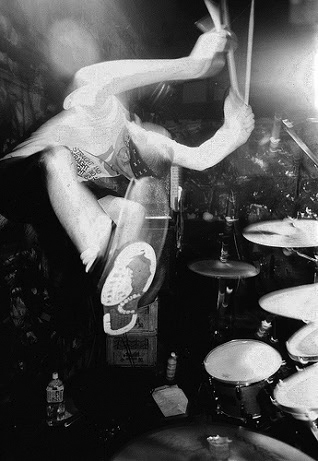
On: Regarding your job based on your education. Can you describe what you do on a day to day basis?
I am a professor of Japanese history, which means that I teach college courses and am expected to publish original research including books and journal articles. So during the semesters when classes are held, I spend most of my time, teaching, preparing to teach, grading, meeting with students, or on committees related to the functioning of my institution. In the summer and winter holidays, I am usually in Japan reading or writing for my research publications. And throughout the year I present my ongoing research at academic conferences or when invited to give talks at other universities. It is very time consuming, but occasionally I am able to attend a show, or host friends who are travelling through town. But I am just not able to go to shows regularly or participate as much as I used to.
On: Just a side note. Do you have any fast hardcore fans among your students and has anyone recognized you as Max 625 in addition to being a professor?
I think my students know that I used to play in bands, but most of them are not the type to listen to hardcore or grindcore. There have been a few exceptions when a student who is into experimental noise or grindcore discovers my old bands and actually becomes a fan of them. But for the most part, I try to keep those two worlds separate.
On: Do you still have a time to skate? I’m sure skating is still impressive and amazing to a 16-year-old kid. What are your favorite and least favorite aspects of skating right now? So what is your first memory of skating?
I wish I did but for a number of reason, least of all time, I don’t regularly skate. Oddly though I still find myself staying up to date with the magazines and videos, almost unconsciously – as if I am still interested in the culture if I am physically not skating as much anymore. Least favorite aspect = that everything is monetized and that some people still approach it like a “sport.”
My first memory of skating is around 1978 or 1979 and pushing around on a small board that my neighbor gave me. By 1982-83, I was trying out bigger boards and studying magazines, much the same way I started doing with learning about hardcore. Back then the two scenes were quite close, and as much as local punk bands influenced me, there were local skate-teams that influenced me, like TEAM YAHTZEE from Palo Alto/Menlo Park, REDWOOD CITY BOYS SHRED (RCBS), TEAM RASTA from Mountain View and others. These consisted of high school kids when I was in grade school, so I would attend skate jams and try to learn from what they were doing, or the bands they had written on the back of their jackets, etc.
A: Is there a skateboard brand that you think would be a great fit for either one of your bands or your label bands to include in their skate video? Do you still follow the contemporary skate scene? And how much do your limbs hurt after years of neanderthal drumming? I mean can you even step on the board? 😂
True, my body is damaged: my back from drumming and my knees from skateboarding. Combined, there are days I have a hard time standing up or sitting.
As for skateboard companies, of course I would like to pick the gnarliest companies like ANTI-HERO, HEROIN or LOTTIES, but in reality, the way my body feels, I think the only fit would be TIRED.
I think if FANCY LAD was around in the 1990s SPAZZ could have been their soundtrack (ha!).
A: I would also like to know what 625 release has the best lyrics in your opinion? Maybe a memorable part of the lyric sheet that’s burnt into your grey matter forever to singalong to? And if there’s maybe a band or a release that resonated with you lyrically even more than musically?
Hhhhmmm, it would be different releases for different reasons. For the youthful energy I would choose maybe RAMBO or CRUCIAL SECTION; for the smart lyrics I would choose WHN? (Devon wrote really insightful lyrics, particularly later); for the sheer craziness I would say GORDON SOLIE MOTHERFUCKERS; or for the sheer brutality, AGENTS OF SATAN or NO LESS.
A: 625 has released a massive amount of quality records that stand the test of time in my books and also are rightfully called classics by many. Some bands, records and tunes are iconic for me and my music music taste development. So are the records covers and the sleeves. Are you able to pick some of your favorite album covers that you have released or album art that looks the best after many years? Is there even something you could call classic 625 art?
Hhhhmmm, another good question. I always left artwork up to the bands, and that is why there is such eclectic artwork. So, if you compare INSECT WARFARE LP to the THEY LIVE LP or the SOCIETY OF FRIENDS LP, they look very different. I love the first CRUCIAL SECTION LP since they hand-drew/glued the collage in original size, so it was awesome to work with. I imagine that’s how the bands they were referencing did so in the 1980s. I think its hard for bands to balance between a cover that adequately expresses the style/band, but is also original, so when a band does that – such as SOCIETY OF FRIENDS – it stands out to me.
On: If you left artwork up to the bands, did you ever got a record which you refused to release? Some controversial lyrics, very bad sound or other collision?
Most of the time I don’t work with bands that would write controversial lyrics in the first place, so that hasn’t been an issue really. Most bands know what 625 is about and my politics. There have been times when the recording does not adequately capture the band’s brutality, or, particularly for an LP, a band did not rise to their potential to carry a full LP (in my opinion). But usually I will talk to a band about it, see what they think and what options we have. Luckily I haven’t had too many “collisions” with bands like this.
On: Finally, do you feel hardcore has shaped your life? Max, many thanks for the interview and huge inspiration.
Yes of course. It has shaped how I think about and interact with the world. Growing up and learning from Tim Yo of MRR, MDC, LARM, HERESY and others, as well as Kent and Lisa at Ebullition and later bands like SEEIN RED, MANLIFTING BANNER, all of Sarah Kirsch’s projects, etc, I learned from them that you need to stake out your ethics and stick with them. This doesn’t have to be an explicit political statement, but an ethics about how you interact with people (bands, in the scene, etc). You will make mistakes, but staking out an ethics will force you to reflect on your actions and interactions with others, and make sure you act according to your beliefs. Transitioning into academia, my punk ethics were challenged in many ways: for example, working at a large institution with questionable objectives, and through which lots of money and power circulate (although not to professors, and very rarely to students). On the one hand, this has made it more difficult for me to acclimate to my job. But on the other hand, it also has made it clearer how much hardcore punk has shaped who I am. Although I have made many mistakes, I think I have a clearer sense of my politics/ethics now which shapes how I respond to the ever-changing punk scene as well as how I function in academia.
Thanks for the interview, and for your support! Excited to be collaborating with old friends and making new ones in the Czech Republic!